While going through the routine of your daily life, you perform a no. of tasks, ranging from looking after your home to taking enough rest, getting involved in proper hygiene, following appointments and having nutritious meals, the level of independence in performing activities of daily living define the quality of life.
Daily living skills, sometimes referred as activities of daily living (ADLs), are daily self care activities in which most people engage on a regular basis without support.
What are the Basic skills of daily living?
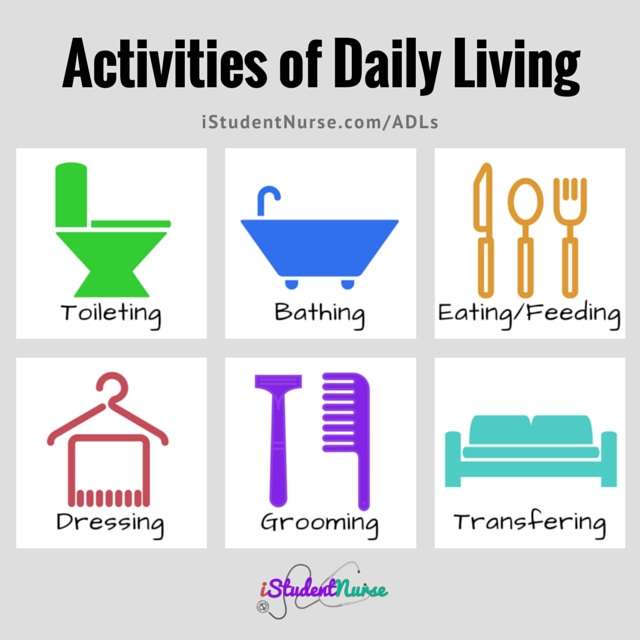
There are six basic ADLs, or physical ADLs concerning one’s basic physical needs.
- Ambulating or functional mobility: To move from one place to another safely and freely.
- Feeding: To feed oneself.
- Dressing: To get an outfit and putting clothes on appropriately.
- Personal hygiene: To manage personal hygiene, such as showering, brushing teeth and grooming.
- Continence: To control both bowel and bladder movements.
- Toileting: To get to and from the washroom, use the washroom correctly, and cleaning the self properly.
What are the Instrumental Activities of Daily Living?
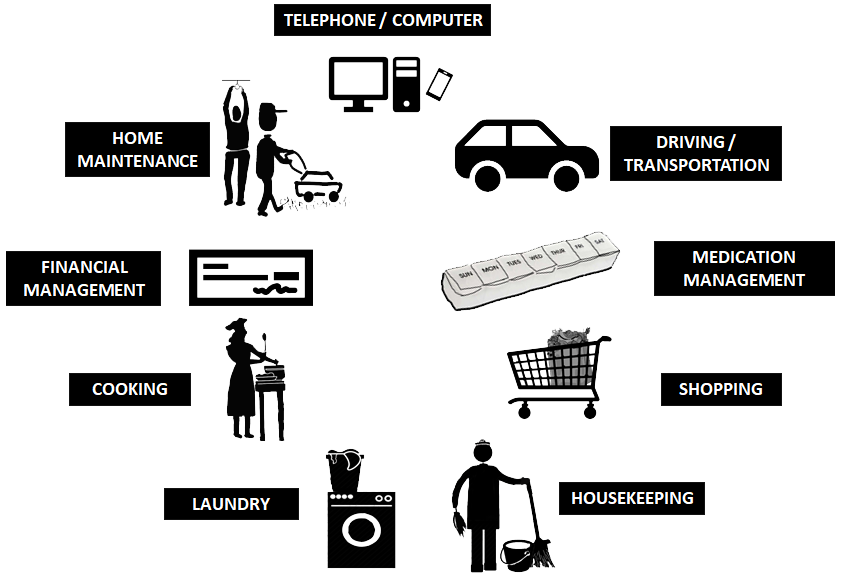
As basic ADLs involve physical work, instrumental activities of daily living (IADLs) include the activities that need higher order and complex thinking.
The American Occupational Therapy Association (AOTA) considers the following twelve IADLs:
- Caring of others
- Caring of pets
- Nurturing of a child
- Communication management
- Community mobility
- Finance management
- Health maintenance and management
- Home maintenance and establishment
- Meal making and clean-up
- Religious observations
- Safety measures and emergency responses
- Shopping
Since ADLs refer to the level of skill that one needs to survive independently. The number of ADLs one needs assistance with is one way of evaluating how severe his disability is. Research has found that disabled individuals usually need help with some of these activities. People having disability usually need assistance in dressing and bathing. Several illnesses, injuries, diseases, and other situations can cause trouble managing daily living activities. Nearly any condition, if it’s severe enough, can stop a child from performing some of the activities of everyday life. Sometimes this is short-term, other times, the difficulty is the part of a permanent disability.
Health professionals tend to talk about ADLs concerning older people, as it is the largest group of people having difficulty with daily living skills. Conditions that mostly affect older people, like Heart disease, Parkinsonism and Stroke, often cause problems with self-help. A clear trend is initiation of increased help with home living skills, due to increasing number of older adults and dependent young ones and children.
Physiotherapy for the improvement of self-dependence in performing daily living skills:
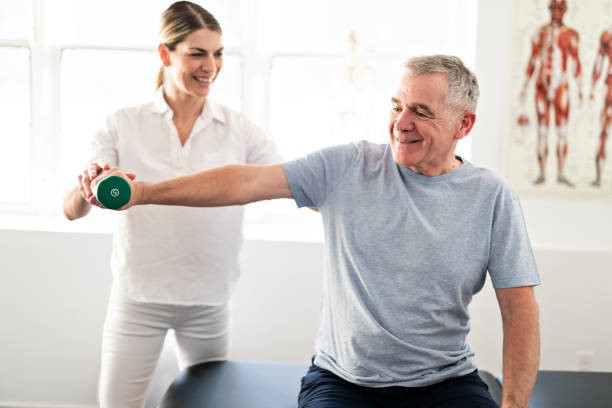
Physiotherapists evaluate the ADLs and IADLs as part of evaluating an older person’s functioning. Problems with ADLs and IADLs typically reveal issues with physical health or cognitive health. Identifying the troubles in functioning can help us to diagnose and cope with the problems distressing their everyday life. Physiotherapists help people in performing ADLs through exercise therapy and improving joint mobility and strength, Improving walking speed, grip, strength, pain management and improving balance etc., to improve a person’s ability to perform ADLs.
While going through the routine of your daily life, you perform a no. of tasks, ranging from looking after your home to taking enough rest, getting involved in proper hygiene, following appointments and having nutritious meals, the level of independence in performing activities of daily living define the quality of life.
Daily living skills, sometimes referred as activities of daily living (ADLs), are daily self care activities in which most people engage on a regular basis without support.
What are the Basic skills of daily living?
There are six basic ADLs, or physical ADLs concerning one’s basic physical needs.
- Ambulating or functional mobility: To move from one place to another safely and freely.
- Feeding: To feed oneself.
- Dressing: To get an outfit and putting clothes on appropriately.
- Personal hygiene: To manage personal hygiene, such as showering, brushing teeth and grooming.
- Continence: To control both bowel and bladder movements.
- Toileting: To get to and from the washroom, use the washroom correctly, and cleaning the self properly.
What are the Instrumental Activities of Daily Living?
As basic ADLs involve physical work, instrumental activities of daily living (IADLs) include the activities that need higher order and complex thinking.
The American Occupational Therapy Association (AOTA) considers the following twelve IADLs:
- Caring of others
- Caring of pets
- Nurturing of a child
- Communication management
- Community mobility
- Finance management
- Health maintenance and management
- Home maintenance and establishment
- Meal making and clean-up
- Religious observations
- Safety measures and emergency responses
- Shopping
Since ADLs refer to the level of skill that one needs to survive independently. The number of ADLs one needs assistance with is one way of evaluating how severe his disability is. Research has found that disabled individuals usually need help with some of these activities. People having disability usually need assistance in dressing and bathing. Several illnesses, injuries, diseases, and other situations can cause trouble managing daily living activities. Nearly any condition, if it’s severe enough, can stop a child from performing some of the activities of everyday life. Sometimes this is short-term, other times, the difficulty is the part of a permanent disability.
Health professionals tend to talk about ADLs concerning older people, as it is the largest group of people having difficulty with daily living skills. Conditions that mostly affect older people, like Heart disease, Parkinsonism and Stroke, often cause problems with self-help. A clear trend is initiation of increased help with home living skills, due to increasing number of older adults and dependent young ones and children.
Physiotherapy for the improvement of self-dependence in performing daily living skills:
Physiotherapists evaluate the ADLs and IADLs as part of evaluating an older person’s functioning. Problems with ADLs and IADLs typically reveal issues with physical health or cognitive health. Identifying the troubles in functioning can help us to diagnose and cope with the problems distressing their everyday life. Physiotherapists help people in performing ADLs through exercise therapy and improving joint mobility and strength, Improving walking speed, grip, strength, pain management and improving balance etc., to improve a person’s ability to perform ADLs.