The education system in USA has not dealt with extended shutdowns before, like the lockdown executed due to the pandemic of COVID-19. As far as the education system in the United States is concerned the administrators, teachers and parents all have played their part to maintain and keep the education system alive, despite of all the efforts, the online education system is still not likely to provide the quality of education that is delivered in the setup of classroom.
Following are some of the factors which resulted in lack of learning and fall in education rates in USA students due to Covid-19:
RACIAL AND ECONOMIC GAPS
The sudden shift to the learning system has affected badly the academic advantages for many students in America, and expanded economic and racial gaps. Racial and socioeconomic achievement gaps have most likely widened because of differences in access to the facilities for online studies, i.e. computers, internet connections at homes and direct lessons from teachers. Not only this but those having active internet connections might suffer from fluctuations in internet signals which leads to significant loss for them despite having the facilities available at their homes.
The continuous differences in achievement levels due to the financial differences among white students and the students having hispanic and black inheritance, the shutdowns of schools and the shift of education to online learning, the circumstances not only caused learning loss for the students affected by these gaps, but it also lead to the drop out of many of them. This lead to long-term influences on the long-term economic well-being of the students and on the overall economy of the US.
LOSS OF STRUCTURAL LEARNING:
Although with online studies, some students have the abilities and potential do to well and can even do better than those at traditional ones (School campuses), yet according to research most studies have concluded that full-time virtual schooling is not able to provide the same academic results like those of in-class instruction. In addition, in 28 states, with around 48 percent of K–12 students, distance learning has not been authorized. As a result, many students did not receive any instructions until the schools reopened which lead to noteworthy learning loss of kids in USA due to school closures during the COVID-19 pandemic.
LACK OF EFFECTIVE LEARNING TECHNOLOGIES:
Research on the subject of online learning and teaching has shown that they are productive only if students have constant access to computers and internet and if the teachers have acknowledged targeted training and supports for online instructions. For the reason that these necessary requirements for efficiency have been mainly absent for most of them, hence the education during the pandemic has had a setback of both teaching and learning.
SOCIAL RESTRICTIONS:
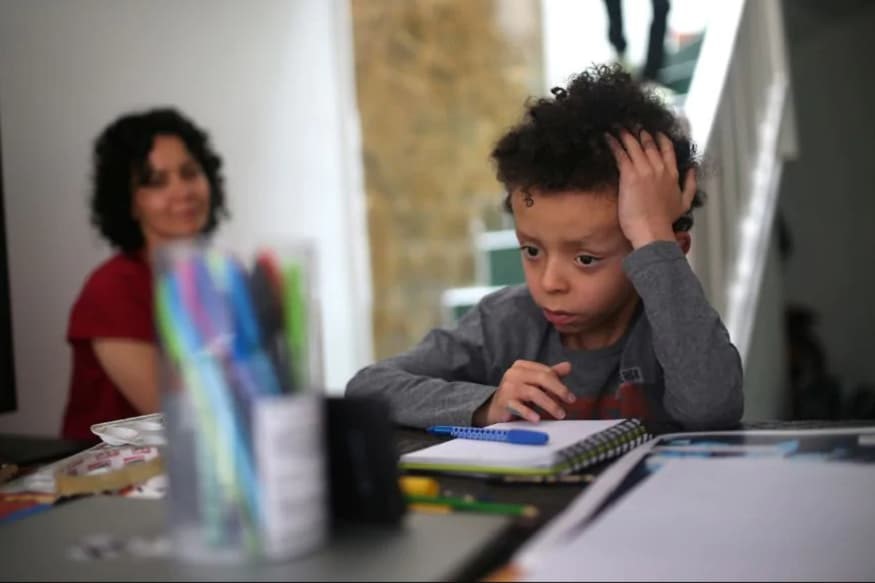
Children, who escaped from the severe symptoms of Covid-19, however had to sacrifice the schooling to which they were entitled and had to accept the limitations that often affected their friendships, mental health, as being a part of public efforts, by staying at homes, to help protect their own health and also to save lives of their families, teachers, friends and those living in their communities.
LACK OF COMMITMENT BY GOVERNMENT:
During the course of this pandemic, students, parents, teachers and all of the related authorities have been exhausted by the direct influence of governments’ long-term lack of commitment to improving the discrimination and inequalities in their teaching systems, and their failure to approve basic government services and this issue is one of the biggest challenges and problems due to online schooling of school kids in USA due to Covid-19.
STUDY GAPS:
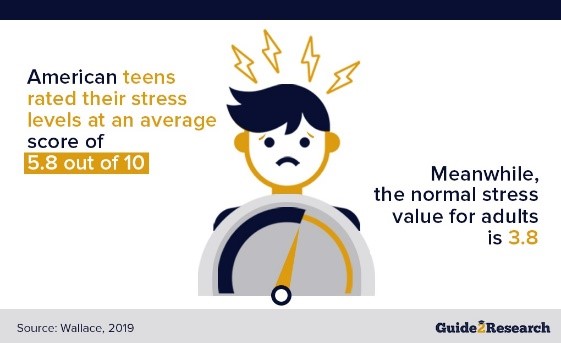
Many parents and teachers thus share a common concern that when the pandemic will be finally over, kids will get back to school with a lower level of motivation and achievement. There are also concerns that the gap between high- and low-achieving students will become greater. Meanwhile, teachers are trying to produce content for an online learning platform and parents are struggling with work responsibilities (if not jobless) it became difficult for them to care for and to educate their own children. Due to the lack of scrutiny students themselves have faced isolation, mistakes in homework as it remained unchecked, they have also the lost the habit of maintaining proper routines at home, hence they have often missed classes because of getting up late in the morning, being sleepy and lacking concentration during classes, they also have suffered from anxiety about a deadly virus, and uncertainty about what the future has to bring for them, all these factors seem to be the makeable cause of decline in learning capabilities of school students in USA due to Covid-19.
HEALTH ISSUES DUE TO ONLINE STUDIES:
Studies have concluded that continuously sitting on misfit furniture is leading to poor posture and is causing the students to suffer from several types of musculoskeletal disorders. In the same way, a research directed to determine the effects of not considering ergonomical factors when designing proper furniture and sitting spaces for students. The authors concluded that up to 69% of students reported discomfort in their body, because of this fact, 23% of them had felt pain in their hands and elbows, and 19% students had experienced headaches from time to time. In the same way, other researchers found that students may be exposed to problems due to ergonomic risks that are caused by environmental factors which lead to academic loss in USA due to Covid-19.
LACK OF INTERACTIVE EXPERIENECES TOWARDS LEARNING:
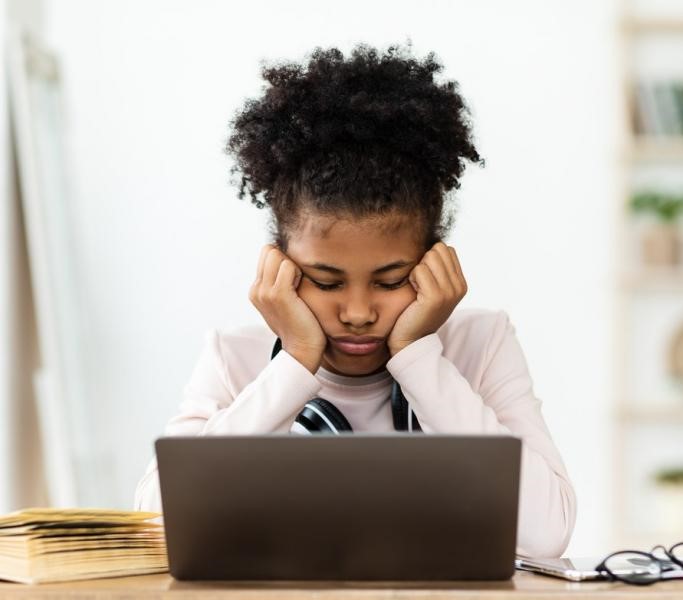
Most significant results indicated that 59.5% of students pointed out that the face to face interaction contributes considerably in improving their academic performance, and 55.5% of the students mentioned that the volume of assignments they got from online learning, led to misunderstanding, exhaustion, and poor performance. As they did not get opportunities to have direct interaction with the instructors to overcome their ambiguities due to the impact of school closures in USA during covid-19.
On the other hand, when students go through sudden changes in the program requirements, faculty turnover, or program focus they start to discern a difference between the program and their aims and determination in the program is badly impacted.
Student academic performance (SAP) involves educational achievements, achievements of learning objectives, attainment of desired skills and capabilities, gratification, perseverance, and post-school performance. All of them had been badly influenced in USA due to significant fall in the grades of students, sluggishness and poor schedules due to lack of proper schooling .
PROMINENT VARIABILITIES ASSOCAITED WITH ONLINE LEARNING:
Attitude, curriculum, motivation, technology and training were found to have an impact on online classes. Three variables (attitude, motivation and training) have had a positive influence on online classes, on the other hand two variables (curriculum and technology) have had a negative influence on the online classes.
FINANCIAL BURDEN/ CRISIS:
Students having lower financial status are less likely to have access to high-quality setup for online learning or to a productive learning environment, such as a quiet and peaceful space with minimal interruptions, devices that they do not have to share with anyone, high-speed and quality internet connection, and supervision of parents related to academic performance. Involvement rates are also having setbacks in schools serving mainly black and Hispanic students, just 60 to 70 percent are attending online classes regularly. Some teens having lower incomes complain that they lack facilities to complete schoolwork at home. In a 2018 Center survey, about one-in-five teens aging 13 to 17 (17%) reported they are mostly or sometimes unable to complete homework assignments as they do not have consistent access which is the main cause of loss of learning in USA during Pandemic.
PARENTAL ILLETRACY LEADING TO LOSS OF LEARNING:
Given the type of online schooling, less educated parents have had hard time in assisting their children than highly educated parents, even though they faced knowingly more issues with computer and internet access. several reasons for these difficulties have been explored, including parents’ “first choice” for children’s educational accomplishments, different returns to the parent’s time giving schoolwork help, predominance of single-parent households in which parental time is especially limited, and/or social standards in school systems.
HOME-WORK COMPLETION:
The “homework gap” which denotes school-aged children deficient in the connection and interaction they need to finish their schoolwork at home is more prominent for blacks, Hispanics and the households having lower financial resources.
LACK OF FACILITIES FOR CHILDREN WITH SPECAIL NEEDS:
Parents of children with disabilities and special educational needs in the USA were asked to explain the impact of COVID-19 on their mental health and also on their child. Both children and parents appear to be undergoing loss, stress and changes in behavior and mood as a result of the sudden social changes that have occurred so far. Some parents described feeling overworked and disturbed due to the influence of child’s understanding and awareness all of which is a result of negative impact of Covid-19 on the education of kids in USA.